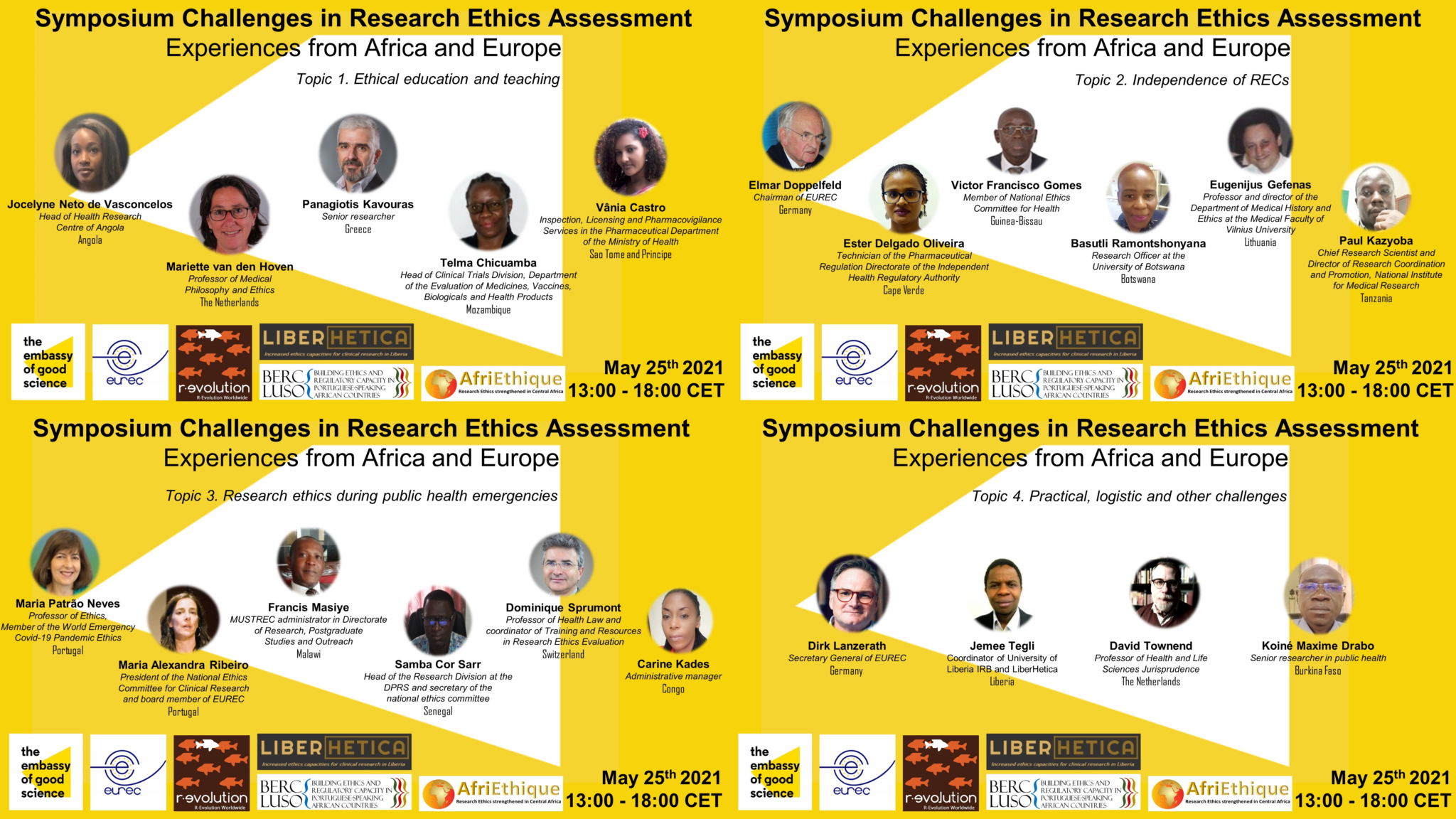
The symposium,  organised by The Embassy of Good Science, in collaboration with EURECBERC-LusoAfriEthique, and LiberHetica, aims to facilitate the sharing of experiences and perspectives on research ethics assessment challenges between African and European experts. The symposium is organized into four sessions in which experts will present on challenges and solutions related to the theme of their session. A panel discussion will follow the speaker presentations https://bit.ly/3tqlS9H.

The symposium will be live streamed here (no registration required):

https://zoom.us/j/92564963152?pwd=M3JnYWNYNEU2eVYrR3NrUG5vSWR1QT09

Passcode: sN6yzc
Leave a Reply

Your email address will not be published. Required fields are marked *

Explore More

HORIZON-JU-GH-EDCTP3-2024-01-06-two-stage Call successful submission

A consortium composed by University of Sciences, Technologies and Techniques of Bamako (USTTB, Mali), Ministry of Health of Burkina Faso,  University of Bordeaux (France), and Fondazione Bruno Kessler (FBK, Italy)

R-Evolution Worldwide as part of a multidisciplinary team of African and European researchers developed the VectorEnd project.

The increasing urbanization in Africa, paralleled by inadequate environmental sanitation, significantly contributes to the proliferation of Aedes mosquitoes, which transmit many arboviruses, including dengue virus (DENV) and Chikungunya virus (CHIKV). In 

Indirect effects of the COVID-19 pandemic on malaria in Africa

In Africa, pregnant women and young children are the most vulnerable to malaria. However, malaria control interventions and strategies have achivied important results in the last years. COVID-19 has now