R-Evolution Worldwide – Sierra Leone is starting to operate in the Western Area Urban and Rural District of Freetown, Sierra Leone.

R-Evolution Worldwide – Sierra Leone is local community-based organization, registered to the Ministry of Social Welfare, Gender and Children’s affairs (MSWGCA), the local council and the Ministry of Health and Sanitation (MoHS).

R-Evolution Worldwide – Sierra Leone is established by a group of Sierra Leoneans who will be advocating on the following areas:
·         Early Marriage
·         Teenage Pregnancy
·         Child Labour
·         Sexual Offence
·         Child Healthcare
·         Hygiene and Sanitation
·         Food Education
·         Prevention of Youth Migration, awareness raising and information campaigns on the risk of irregular migration.

The organization is created as an independent non-profit organisation (local Community Based Organisation – CBO) with strict political and religious neutrality, with a particular respect for the principle of non-discrimination based on race, ethnic, political and religious orientation.
Leave a Reply

Your email address will not be published. Required fields are marked *

Explore More

Biomedical Ethics and Regulatory Capacity Building: International Dialogues

The LiberHetica and BERC-Luso consortia will meet on the 26th March 2021 to discuss about Biomedical Ethics and Regulatory Capacity Building in Sub-Saharan African countries. The LiberHetica and BERC-Luso are two projects funded by

Neglected Tropical Diseases affect 1 in 5 people in the world

Neglected Tropical Diseases affect 1 in 5 people worldwide. Affecting over 1.7 billion people, the Neglected Tropical Diseases impair physical and cognitive development, contribute to mother and child illness and

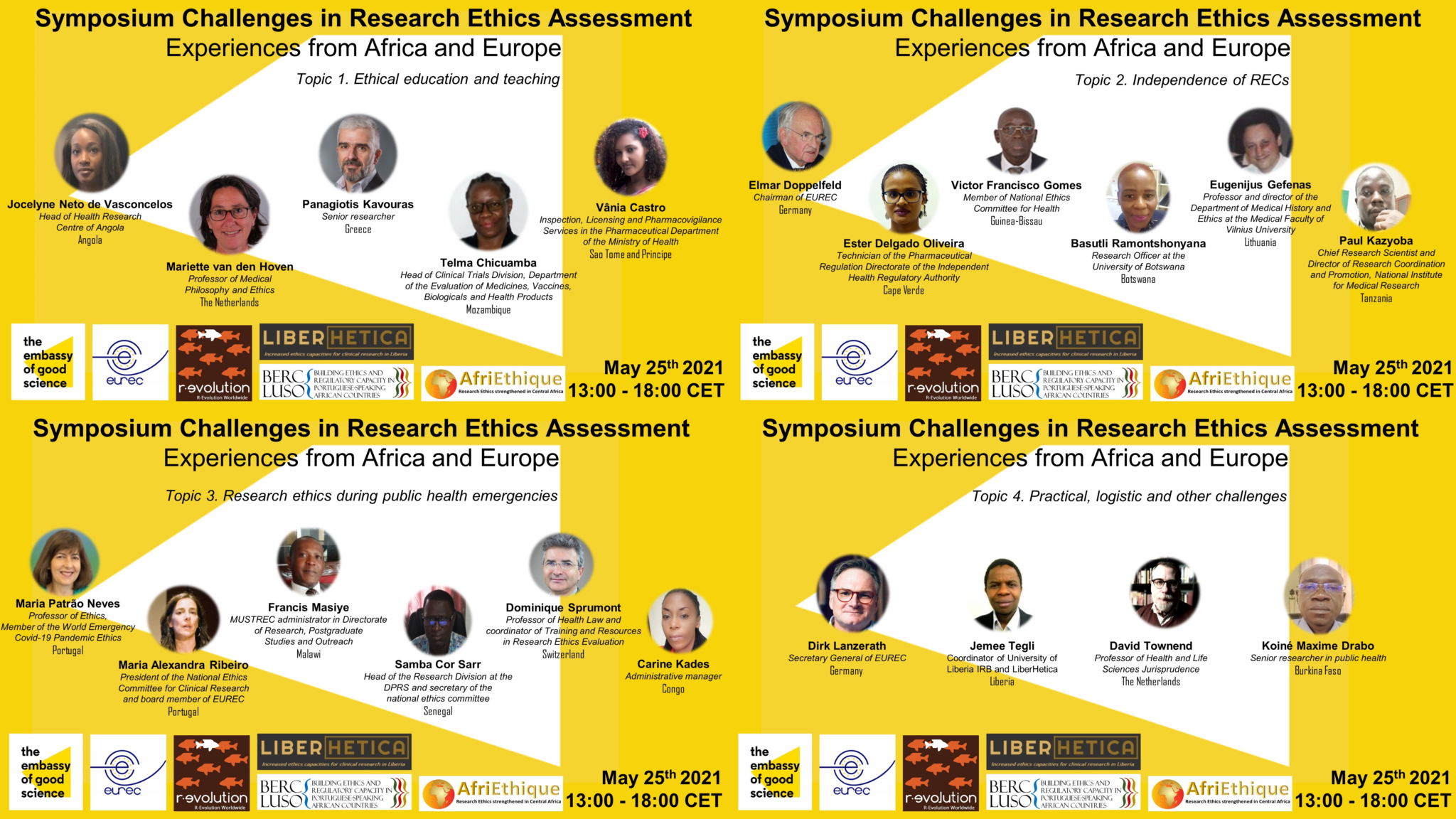
African-European Symposium: Challenges in Research Ethics Assessment, 13:00 – 18:00 CET, May 25th, 2021.

The symposium,  organised by The Embassy of Good Science, in collaboration with EUREC, BERC-Luso, AfriEthique, and LiberHetica, aims to facilitate the sharing of experiences and perspectives on research ethics assessment challenges between African and