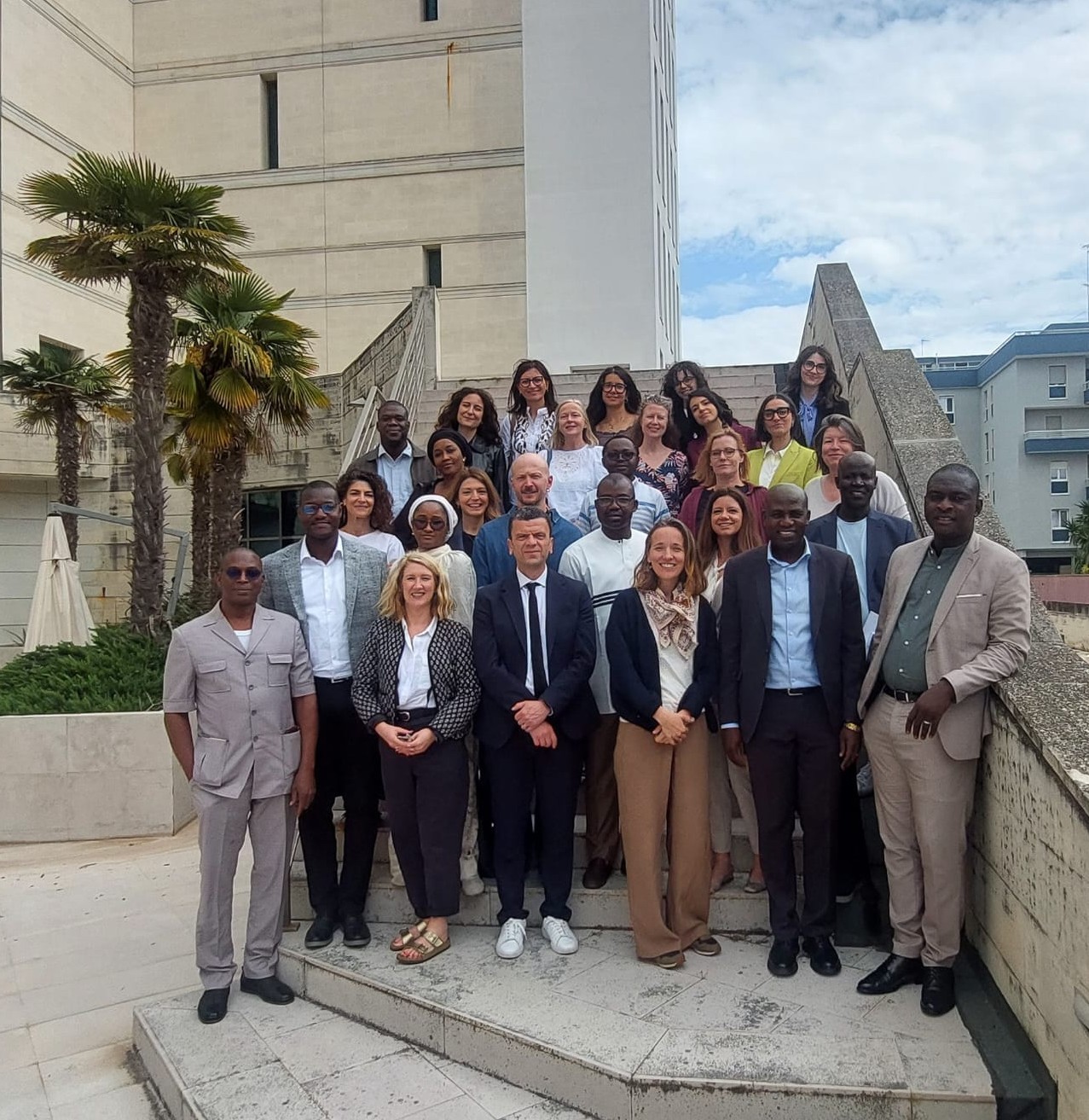
This year Lecce served as the host city for the Annual Meeting of our coordinated project IMVACS (Building multidisciplinary evidence to support Integrating Malaria VACcine with Seasonal malaria chemoprevention in West Africa). Funded by the European Union’s EDCTP3 program, the initiative is dedicated to advancing malaria prevention strategies for children under five in Mali and Burkina Faso.
The IMVACS project brings together a strong international consortium of African and European scientific institutions, including:
- R-Evolution Worldwide – Coordinator (Italy)
- Université des Sciences, des Techniques et des Technologies de Bamako (USTTB, Mali)
- Centre National de la Recherche Scientifique et Technologique / Institut de Recherche en Sciences de la Santé (CNRST/IRSS, Burkina Faso)
- Epicentre / Médecins Sans Frontières (France)
- Liverpool School of Tropical Medicine (LSTM, UK)
Bridging global research and local academic excellence
It is against this backdrop that R-Evolution Worldwide makes its active contribution, engaging in research on malaria and drug resistance through a PhD program in Nanotechnology held by UniSalento. Within this framework, a scholarship co-funded by R-EvoWW has been established, titled “Malaria and drug resistance: development of new therapeutic strategies.”
The research is conducted by PhD candidate Sara Greco, supervised by Prof. Alessandra Ferramosca, Professor of Biochemistry at the Department of Experimental Medicine.
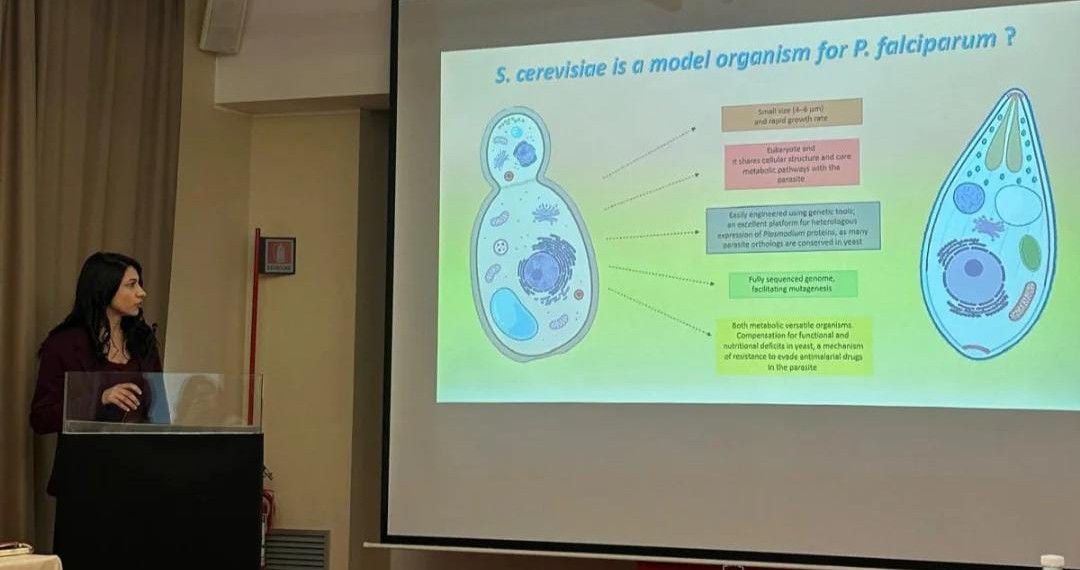
During the meeting Sara had the opportunity to share the initial findings from her research, which focuses on mitochondrial function in Plasmodium falciparum as a promising target for new antimalarial therapies. By utilizing Saccharomyces cerevisiae (yeast) as a versatile, cost-effective model organism, the study evaluates how drugs disrupt the parasite’s energy pathways and helps uncover the cellular mechanisms driving drug resistance.
A synergy between social impact, academia, and international cooperation
To conclude the week of collaboration and strategic planning, we guided a delegation of international partners in visiting UniSalento’s state-of-the-art research infrastructure across the campus, such as CNR Nanotech (Institute of Nanotechnology) and Department of Biological and Environmental Sciences and Technologies (DiSTeBA).
This visit offered partners a firsthand look at the advanced technological local capabilities supporting the ongoing intercontinental joint research efforts.
By linking frontline institutions in West Africa, leading European research centers, and academic excellence at UniSalento, R-Evolution Worldwide continues to foster multidisciplinary synergies that translate high-level scientific innovation into real-world health solutions for vulnerable populations.
Curious about Sara’s research? Don’t miss the opportunity to know more: sara.greco@revolutionworldwide.community.