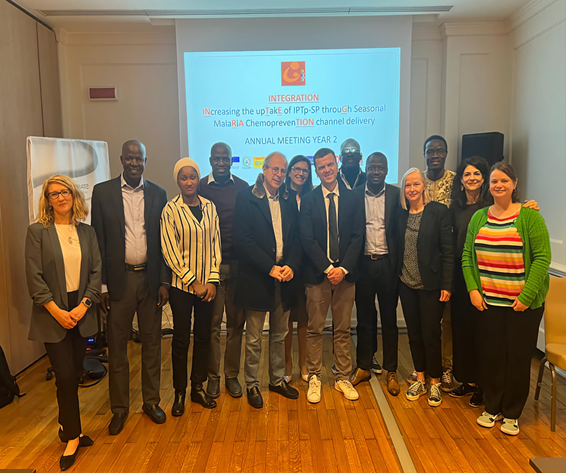
The INTEGRATION consortium held its annual meeting of the year 2 of the project on 6th and 7th March 2023 in Rome, Italy. During the meeting, the progress of the project was presented by the different members of the consortium.

Professor Andrea Crisanti (Full Professor of molecular parasitology at Imperial College in London – Department of Life Sciences and Senate of the Italian Republic) also took part in the event with a plenary speech on scientific advances in the manipulation of the natural selection of mosquitoes to disrupt the reproductive capacity of malaria vectors.
Leave a Reply

Your email address will not be published. Required fields are marked *

Explore More

African and European multidisciplinary researchers established an integrated consortium to develop a research project on the dengue and Zika viruses affecting Africa and the world

Dengue and Zika viruses are arboviruses primarily transmitted by Aedes mosquitoes. Dengue and Zika infectious disease frequently erupt in tropical and subtropical regions. Globalization coupled with climate change, significantly expedites their worldwide

HORIZON-JU-GH-EDCTP3-2024-01-06-two-stage Call successful submission

A consortium composed by University of Sciences, Technologies and Techniques of Bamako (USTTB, Mali), Ministry of Health of Burkina Faso,  University of Bordeaux (France), and Fondazione Bruno Kessler (FBK, Italy)

African-European Symposium: Challenges in Research Ethics Assessment, 13:00 – 18:00 CET, May 25th, 2021.

The symposium,  organised by The Embassy of Good Science, in collaboration with EUREC, BERC-Luso, AfriEthique, and LiberHetica, aims to facilitate the sharing of experiences and perspectives on research ethics assessment challenges between African and