This image has an empty alt attribute; its file name is Immagine-WhatsApp-2023-12-04-ore-10.44.45_6c76537b-1024x695.jpg

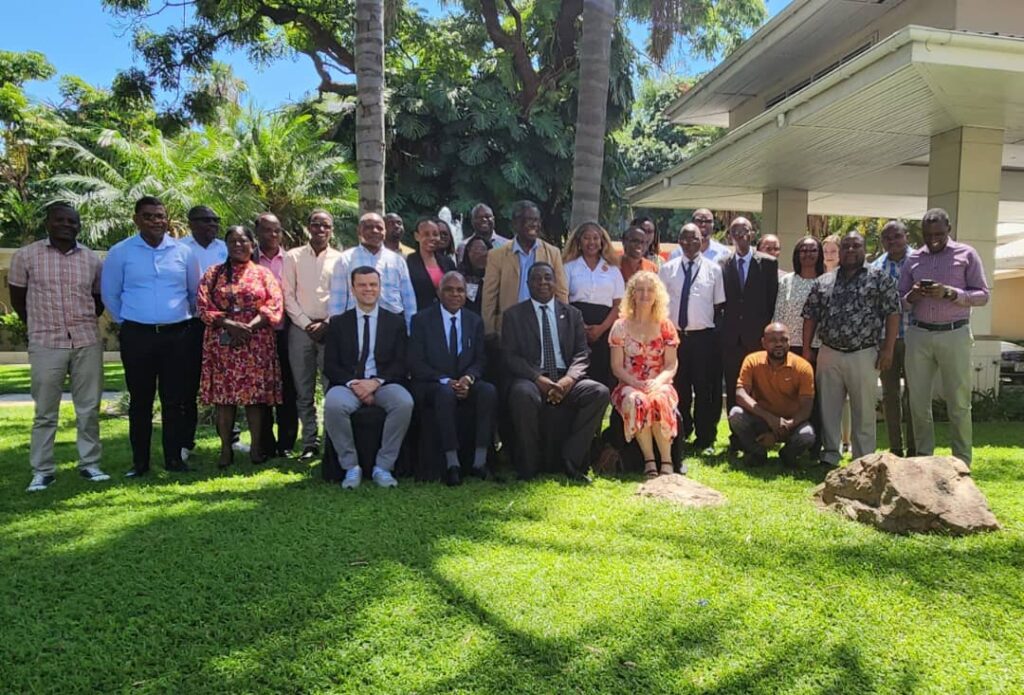
The NeuroSolve consortium held its Project Kick-off Meeting on the 4th December 2023 in Lusaka (Zambia). NeuroSolve is a four-year project funded by EDCTP3, lead by an African-European research consortium involves the University of Dar es Salaam (UDSM – Tanzania), Sokoine University of Agriculture (SUA – Tanzania), University of Zambia (UNZA – Zambia), Revolution Worldwide Srl – Impresa Sociale (R-EvoWW – Italy) and Universiteit Ghent (UGent – Belgium).

Leave a Reply

Your email address will not be published. Required fields are marked *

Explore More

R-Evolution Worldwide as part of a multidisciplinary team of African and European researchers developed the VectorEnd project.

The increasing urbanization in Africa, paralleled by inadequate environmental sanitation, significantly contributes to the proliferation of Aedes mosquitoes, which transmit many arboviruses, including dengue virus (DENV) and Chikungunya virus (CHIKV). In 

Gloria Mason, Director for the Liberia National Ethics Review Board and member of the LiberHetica, speaker at international seminars on ethics in data sharing

Proud to have Gloria Mason, Director for the Liberia National Ethics Review Board and member of the LiberHetica (http://liberhetica.org) project in the panel of joint online seminars examining the GFBR

African-European Symposium: Challenges in Research Ethics Assessment, 13:00 – 18:00 CET, May 25th, 2021.

The symposium,  organised by The Embassy of Good Science, in collaboration with EUREC, BERC-Luso, AfriEthique, and LiberHetica, aims to facilitate the sharing of experiences and perspectives on research ethics assessment challenges between African and