We are pleased to share that our organization has submitted the project proposal CLIMATE-EAVE under the EDCTP3 call HORIZON-JU-GH-EDCTP3-2026-02-two-stage: Global collaboration action on climate and health in sub-Saharan Africa.
Climate change is increasingly affecting the transmission of malaria and arboviral diseases across sub-Saharan Africa, altering rainfall patterns, flooding dynamics, and temperature, and consequently intensifying vector breeding and shifting seasonal risk. Epidemic-prone settings and flood-affected communities are becoming more vulnerable, while the scale-back of indoor residual spraying in several countries is leaving limited options for rapid epidemic response.
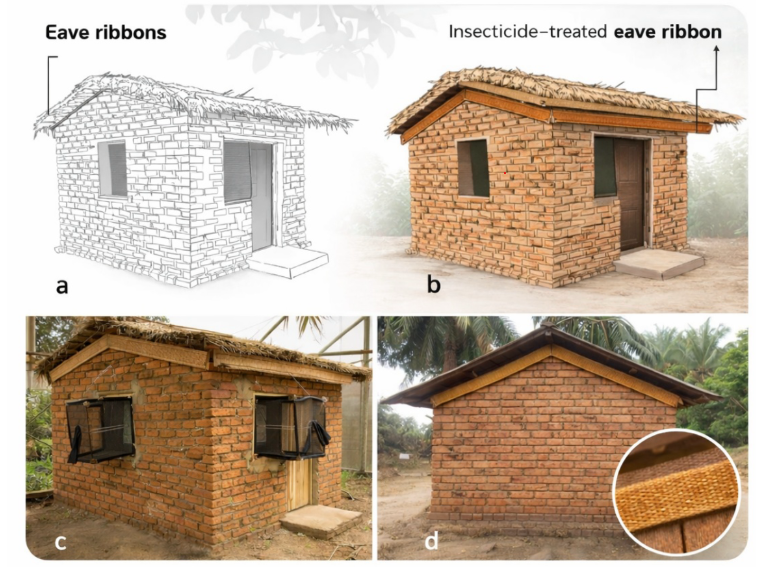
The CLIMATE-EAVE project aims to address these gaps through implementation science evaluating the use of transfluthrin-treated eave ribbons, a low-cost and scalable tool designed to protect both indoor and peri-domestic spaces. The project integrates climate-informed early warning systems, community-based deployment led by Primary Health Care services and Community Health Workers, and strengthened surveillance–response mechanisms in epidemic and humanitarian settings.
 The programme will be implemented in Tanzania, Uganda, and Kenya, and includes a One Health component targeting arboviruses such as dengue and climate-sensitive zoonotic diseases including Rift Valley fever, combining human, vector, and livestock surveillance in high-risk districts.
The proposal was developed by an international consortium coordinated by the University of Glasgow, in collaboration with Kenya Medical Research Institute, the Ifakara Health Institute, the Ministry of Health of Uganda, Sokoine University of Agriculture, the Kilimanjaro Christian Medical Centre, and R-Evolution Worldwide.
Through a pragmatic adaptive rollout, the project will generate evidence on effectiveness, safety, acceptability, equity, supply chains, and cost-effectiveness, while producing operational tools to support outbreak preparedness and climate adaptation strategies.
We thank all partners for their collaboration and for their shared commitment to developing climate-resilient solutions for epidemic prevention and global health.